
Your roof is showing problems. A few missing shingles after the last storm, a water stain on the ceiling, or maybe granules collecting in the gutters. The question hits: do you need a roof repair, or is it time for a full roof replacement? It's a fair question, and the answer isn't always obvious. The right call depends on the roof's age, the extent of the damage, the condition of the underlayment, and how much longer you want the roof to last. Get it wrong and you're either paying for a replacement too early or patching a roof that should have been replaced years ago. In this guide, we'll walk through how to tell the difference between a roof that needs repair and one that needs full replacement. We'll cover the warning signs, the typical cost factors, and the questions to ask before you sign off on any work. If you own a home in New York, Connecticut, or New Jersey, here's the breakdown.
When a Roof Repair Is Enough
A roof repair makes sense when the damage is limited to a specific area and the rest of the roof is still in good shape. Think a few missing shingles after a windstorm, a leak around chimney flashing, or a small section damaged by a fallen branch. If your roof is under 15 years old and the underlayment is intact, repair is usually the smart call. You're fixing one issue, not replacing a perfectly fine roof. A good residential roofing contractor will inspect the surrounding shingles, check the flashing, and confirm there's no broader damage before recommending a repair. If the answer is yes, roof repair will save you thousands compared to a full roof replacement.
When You Need a Full Roof Replacement
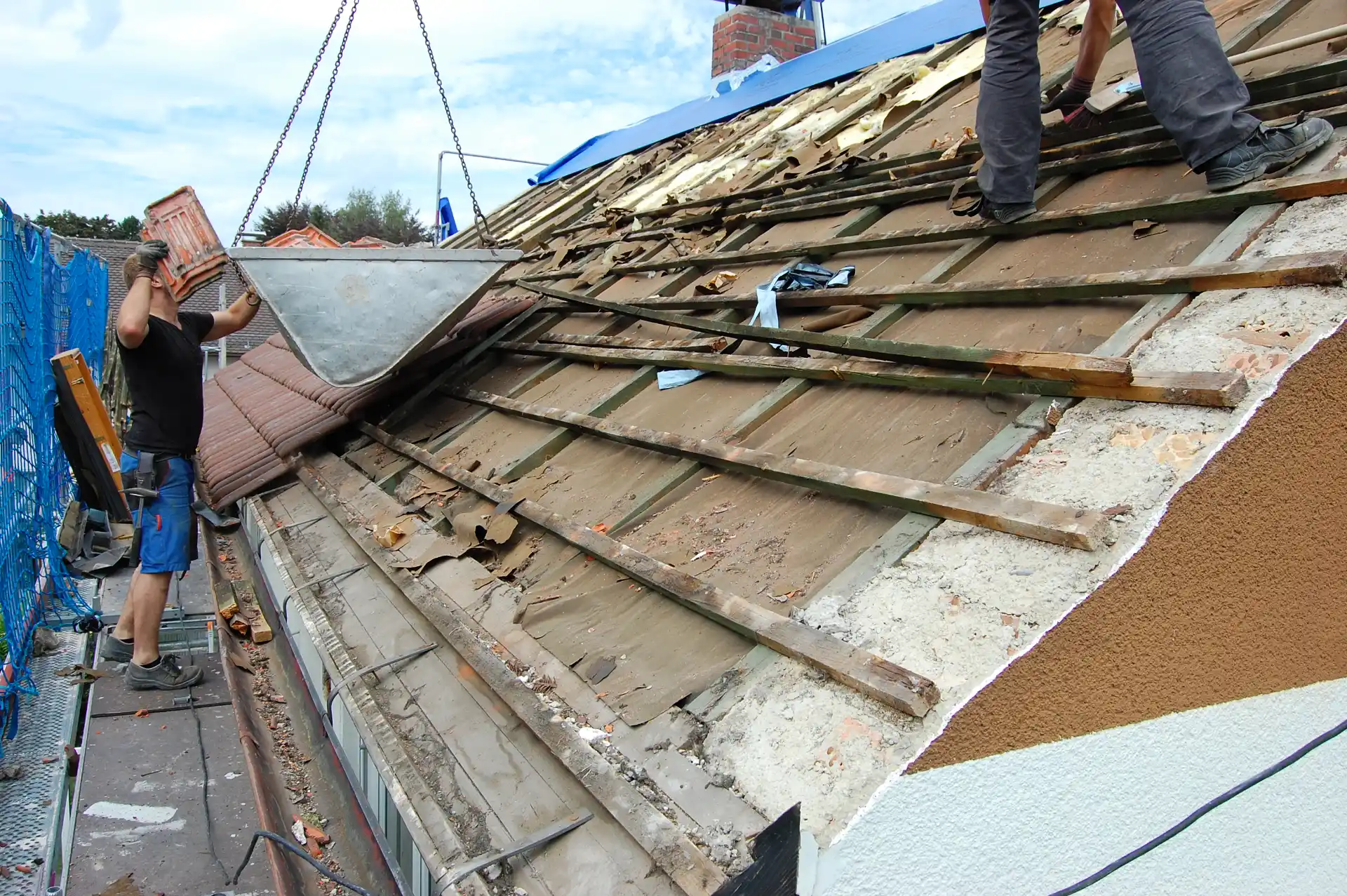
Roof replacement is the right move when the damage is widespread, the roof is past its useful lifespan, or the underlayment itself is compromised. If your roof is 20+ years old, has multiple leaks, sagging sections, or visible wear from years of weather, patching a few shingles won't fix the underlying problem. A full roof replacement gives you a fresh start with new underlayment, new shingles, updated flashing, and proper ventilation. It's a bigger investment upfront, but you're getting another 20 to 25 years out of the roof. If you've already had multiple roof repairs in the past few years, replacement is usually more cost-effective long-term than chasing one leak after another every storm season.
How Roof Age Affects the Decision
Roof age is the single biggest factor in the repair vs replacement decision. Asphalt shingle roofs typically last 20 to 25 years. Architectural shingles can stretch to 30 with proper installation and ventilation. If your roof is in the first half of its expected lifespan, repair almost always makes sense. If it's in the last few years and you're seeing damage, replacement is the smarter long-term call. You're not just paying for the fix today, you're avoiding the next five repair calls coming your way. Any roofing services contractor in NY, CT, or NJ should ask the age of your roof on the first call. If they don't ask, that's a flag worth noting.
What to Expect from a Roof Inspection
A proper roof inspection covers more than just the visible shingles. A good residential roofing team will check the shingle condition, flashing around chimneys and vents, gutters, soffits, attic ventilation, and any signs of leaks inside the attic. Expect them to take photos of any problem areas and walk you through what they found. You should walk away with a written report and a clear recommendation: repair, partial replacement, or full roof replacement. The inspection should take about 45 minutes to an hour for an average home. If the inspection takes ten minutes and you get a quote on the spot with no detail, get a second opinion. A real residential roof inspection takes time and attention to detail.
Frequently Asked Questions
Most residential roof repairs take a single day. Minor patches, missing shingles, and small flashing repairs are usually same-day work. Larger repair jobs that touch multiple sections of the roof can run two to three days.
Roof replacement costs vary by home size, roof complexity, and shingle choice. Get a written estimate before signing anything. A good residential roofing contractor will explain each line item and walk you through what's included in your roof replacement.
A typical roof replacement for a residential home takes two to four days, weather permitting. Larger or more complex roofs can take a week. Your roofing contractor should give a clear timeline in writing with the estimate.
Standard asphalt shingles last 20 to 25 years. Architectural shingles can last 25 to 30 years with proper installation and ventilation. Climate, roof slope, and tree cover all affect how long your residential roof actually lasts.
Most towns in New York, Connecticut, and New Jersey require a permit for full roof replacement. Roof repairs usually don't. Your roofing contractor should handle the permit as part of the project, not leave it to you.
Get Your Roof Estimate in NY, CT, or NJ
Need an honest answer about your roof? Get a free roof inspection and estimate from a residential roofing team serving NY, CT, and NJ.